
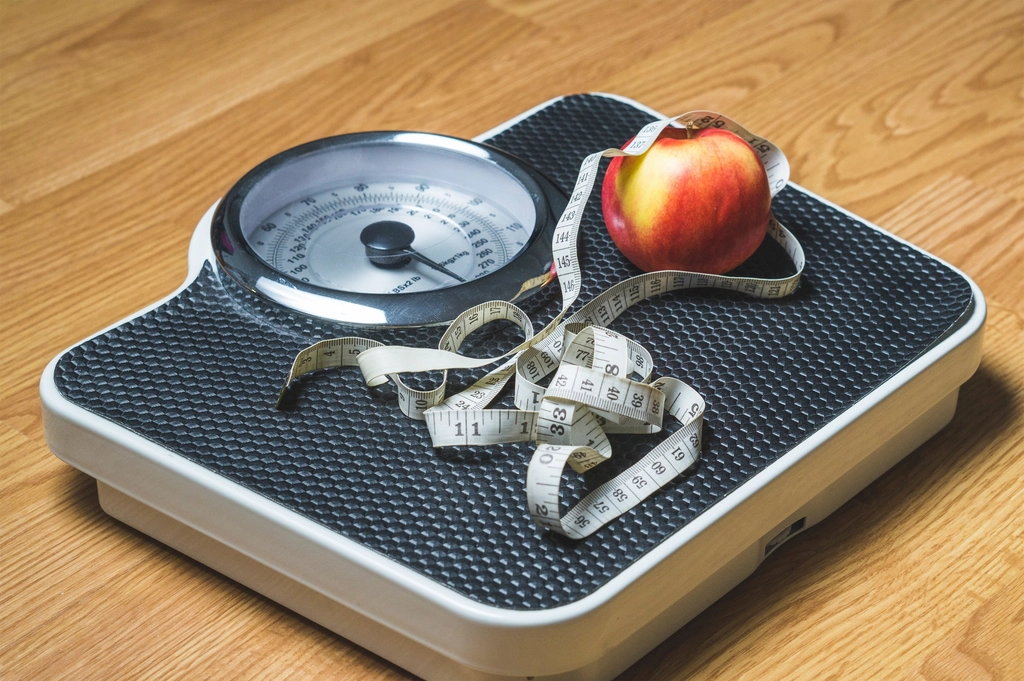
Two people can weigh exactly the same and look completely different. One might be lean and muscular; the other carrying extra fat around the middle. The number on your bathroom scale can't tell them apart, and neither can the BMI chart at your doctor's office. What actually separates them is body fat percentage, the share of your total weight that is fat versus muscle, bone, water, and organs. If you've ever wondered how to measure body fat percentage without an expensive lab, this guide breaks down every realistic option, from a $5 tape measure to a clinical DEXA scan.
We'll cover the four most common methods, how accurate each one really is, the healthy ranges for men and women, why BMI misses the picture entirely, and a fully worked tape-measure example you can copy tonight.
This article is for general informational and educational purposes only and is not medical advice. Body fat percentage is one data point among many, talk to a qualified healthcare provider before making decisions about your weight, diet, or training.
What Body Fat Percentage Actually Measures
Your body is made of two broad compartments: fat mass and fat-free mass (also called lean body mass), which includes muscle, bone, water, and organs. Body fat percentage is simply fat mass divided by total body weight, expressed as a percent.
Some fat is essential. Your body needs a baseline amount to protect organs, regulate hormones, and store energy. According to the American Council on Exercise (ACE), essential fat is roughly 2-5% for men and 10-13% for women, the higher floor in women supports reproductive function. Everything above that is storage fat. Too little is dangerous; too much, especially around the abdomen, is linked to higher risk of type 2 diabetes, heart disease, and other conditions per the CDC and NIH.
This is why tracking composition beats tracking weight alone. If you start lifting weights and eating well, you might gain five pounds of muscle and lose five pounds of fat, the scale shows zero change, but your body fat percentage dropped and your health improved. To see how the lean side of that equation changes, you can run your numbers through a lean body mass calculator alongside your body fat estimate.
Method 1: The US Navy Tape Method
The most practical at-home method is the US Navy circumference method, developed by the Naval Health Research Center and still used by the military to screen body composition. It needs nothing but a flexible cloth or vinyl tape measure and a couple of body measurements, then it runs those through a published formula.
What you measure depends on your sex:
- Men: waist (at the navel) and neck.
- Women: waist (at the narrowest point), neck, and hips (at the widest point).
You also enter your height. The method works because fat distributes in predictable patterns, a thicker waist relative to your neck and height signals more abdominal fat. It's free, repeatable, and you can do it solo (women may want a second pair of hands for the hip measurement). The trade-off is accuracy: studies put the Navy method within about 3-4 percentage points of a lab scan for most people, though it can be off more for very lean or very muscular individuals because it doesn't account for unusual builds.
The key to consistency is technique. Keep the tape snug but not compressing the skin, measure on bare skin, don't pull in your stomach, and take each measurement at the same time of day. Tiny differences in where you place the tape can swing the result by a full percentage point, so measure twice and average. Rather than do the arithmetic by hand, plug your figures into a body fat calculator that uses the official Navy equation and returns your estimate instantly.
Method 2: Skinfold Calipers
Skinfold calipers pinch a fold of skin and the fat directly beneath it at several standardized sites, chest, abdomen, thigh, triceps, and so on. The thicknesses (in millimeters) feed into an equation like the Jackson-Pollock 3-site or 7-site formula to estimate total body fat.
In trained hands, calipers are impressively accurate, often within 3-3.5 percentage points of a DEXA scan. The catch is the phrase "trained hands." Caliper readings depend heavily on pinching the exact same spot with the same pressure every time, which is hard to do on yourself, especially on hard-to-reach sites like your own back. If you measure yourself inconsistently, the error balloons.
Calipers cost $10-30 and shine as a trend tool: even if your absolute number is a little off, doing the measurement the same way each month reliably shows whether you're losing fat. For best results, have the same person measure you each time and stick to one formula.
Method 3: DEXA, BIA, and Other Lab Methods
If you want the closest thing to a gold-standard number, the lab-based options are more precise but cost more or require equipment you don't own:
- DEXA (DXA) scan: A low-dose X-ray that separates fat, lean mass, and bone, and even shows where fat sits regionally. It's considered one of the most accurate practical methods and is widely used in research. A scan typically runs $40-150 in the US and takes about 10 minutes.
- Hydrostatic (underwater) weighing: Long the research gold standard, it weighs you submerged to calculate body density. Very accurate but requires a special tank and full submersion.
- Bod Pod (air displacement): Similar idea to underwater weighing but uses air instead of water. Quick and accurate, found in some labs and universities.
- Bioelectrical impedance (BIA): The technology in smart scales and handheld devices. It sends a tiny electrical current through your body; fat and lean tissue conduct differently. Convenient and cheap, but readings swing with hydration, food, and time of day, so it's best for tracking trends, not for a single precise number.
For most people chasing fitness goals, a DEXA scan once or twice a year as a benchmark, combined with the free Navy tape method weekly or monthly, is a smart, affordable system: the scan calibrates your reality, the tape tracks your progress between scans.
Healthy Body Fat Ranges for Men and Women
There's no single "perfect" number, healthy ranges depend on age, sex, and goals, and women naturally carry more essential fat than men. The widely cited American Council on Exercise (ACE) categories are a useful reference:
| Category | Men | Women |
|---|---|---|
| Essential fat | 2-5% | 10-13% |
| Athletes | 6-13% | 14-20% |
| Fitness | 14-17% | 21-24% |
| Acceptable | 18-24% | 25-31% |
| Obesity (higher health risk) | 25%+ | 32%+ |
A few takeaways. Most healthy, active adults land in the "fitness" or "acceptable" range, you do not need single-digit body fat to be healthy, and chasing it can harm hormones and performance. Ranges also tend to drift upward a little with age, which is normal. And because women's essential fat is much higher, comparing a woman's number directly to a man's is apples to oranges.
Why BMI Misses the Whole Picture
Body Mass Index (BMI) is just your weight in kilograms divided by your height in meters squared. It's cheap, fast, and useful for screening large populations, which is exactly why the CDC and clinics use it. But for an individual, it has one glaring flaw: it can't tell fat from muscle.
BMI treats every pound the same. A muscular athlete and a sedentary person of the same height and weight get the identical BMI, even though their body fat percentages might differ by 15 points or more. This is the classic "muscular athlete flagged as overweight" problem: many NFL running backs and CrossFit competitors register as "overweight" or even "obese" by BMI while carrying very little fat. The reverse, sometimes called "skinny fat" or normal-weight obesity, is just as real: someone can have a perfectly normal BMI but a high body fat percentage and low muscle mass, which still carries metabolic risk.
The honest takeaway is that BMI and body fat percentage answer different questions. BMI is a quick flag; body fat percentage tells you what your weight is actually made of. Use them together, check your BMI calculator result for a fast screen, then measure body fat to understand your real composition. If your BMI says "overweight" but you lift heavy and your body fat is in the fitness range, the body fat number is the more meaningful one.
A Worked Tape-Measure Example
Let's walk through the US Navy method for a real person so you can see exactly how it comes together. Meet Mike, a 35-year-old man who is 5 feet 10 inches (70 inches) tall. Standing relaxed, he measures:
- Waist at the navel: 36 inches
- Neck: 15.5 inches
The Navy formula for men uses the difference between waist and neck (because a bigger waist relative to the neck means more abdominal fat) along with height. Feeding 36-inch waist, 15.5-inch neck, and 70-inch height into the standard Navy equation returns a body fat estimate of about 19%.
Looking at the ACE table, 19% lands Mike squarely in the "fitness/acceptable" zone for men, healthy, not extreme. Now suppose Mike trains and diets for three months, drops his waist to 33 inches while his neck holds at 15.5 inches. Re-running the numbers drops his estimate to roughly 14%, moving him into the "fitness" range. Same height, same neck, but a leaner waist tells the story the scale alone never could.
Notice what mattered: the change in waist circumference. That's the core insight of the Navy method, and it's why measuring consistently (same spot, same tension, same time of day) lets you track real progress. To run your own numbers, the official equation is fiddly to do by hand, so let a body fat calculator handle the math while you focus on the measuring.
Putting It All Together
There's no single perfect way to measure body fat at home, but there is a smart strategy. Use the US Navy tape method as your free, repeatable weekly or monthly tracker. If you can afford it, get an occasional DEXA scan to calibrate your true number. Treat BIA smart scales and calipers as trend tools, not precision instruments. And remember that BMI is a screening shortcut, not a composition measurement.
Most importantly, pick one method and stick with it. Consistency in how you measure matters more than which tool you choose, because the trend over months is what reveals whether you're actually losing fat or gaining muscle. Grab a tape measure, run your numbers through a body fat calculator, and check back in a month. The picture you get will be far more useful than the scale alone ever was.


Comments