
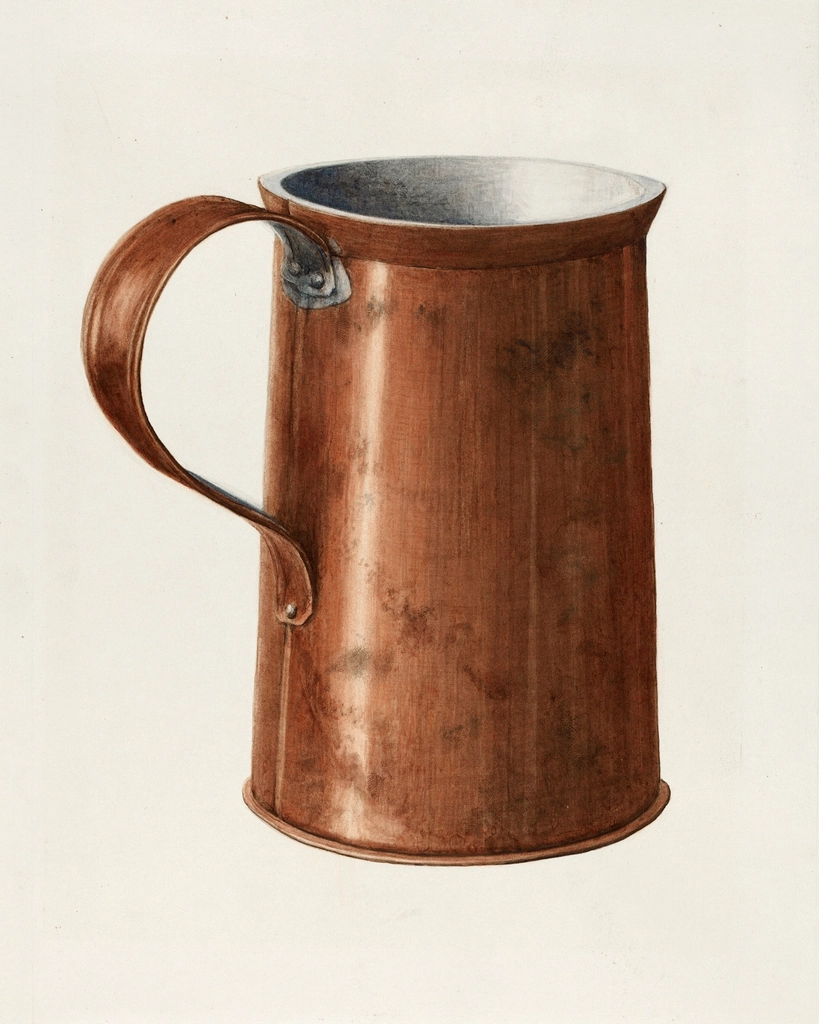
You're halfway through a recipe, the measuring cup is dirty, the European cookbook lists everything in milliliters, and suddenly you're doing mental math over a hot stove. Cup-to-milliliter conversions trip up home cooks constantly, and not because the math is hard. It's because the word "cup" means slightly different things in different countries, and because the same cup of flour and cup of sugar weigh totally different amounts.
This guide clears all of that up. We'll lock down the exact number for a US cup (it's 236.588 mL, usually rounded to 236.6), break down tablespoons and teaspoons, explain the surprisingly important difference between US, metric, and imperial cups, and tackle the question that confuses everyone: why a cup converts to a different number of grams for every ingredient. By the end you'll be able to scale any recipe up or down without second-guessing yourself.
This article is for general informational and educational purposes only. For precise baking, especially commercial work, a kitchen scale is always more accurate than volume measurements.
The One Number to Memorize: 1 US Cup = 236.6 mL
In the United States, the standard customary cup used in recipes and on measuring cups is defined as 236.588 milliliters. That figure comes straight from the legal definition: 1 US cup equals 8 US fluid ounces, and 1 US fluid ounce equals 29.5735 mL. Multiply 8 by 29.5735 and you get 236.588 mL, which nearly everyone rounds to 236.6 mL or simply 237 mL in everyday cooking.
From that single anchor, the rest of the US volume ladder falls into place:
- 1 US cup = 236.6 mL = 8 fluid ounces = 16 tablespoons
- 3/4 cup = 177 mL = 6 fluid ounces = 12 tablespoons
- 2/3 cup = 158 mL = about 10.7 tablespoons
- 1/2 cup = 118 mL = 4 fluid ounces = 8 tablespoons
- 1/3 cup = 79 mL = about 5.3 tablespoons
- 1/4 cup = 59 mL = 2 fluid ounces = 4 tablespoons
Notice how clean the relationships are once you have the anchor. A half cup is exactly half of 236.6, a quarter cup is exactly a quarter, and so on. If you ever forget a sub-measurement mid-recipe, you can rebuild it from 236.6 in your head. To skip the arithmetic entirely, our cooking measurement converter turns any cup amount into milliliters, ounces, or tablespoons instantly.
Tablespoons and Teaspoons: The Small Stuff That Matters
Most cup-to-mL confusion actually happens at the small end of the spectrum, because that's where a tiny error ruins a dish. Too much baking soda or salt is far more noticeable than a slightly-off cup of flour. Here are the US definitions:
- 1 US tablespoon (tbsp) = 14.79 mL, almost always rounded to 15 mL
- 1 US teaspoon (tsp) = 4.93 mL, rounded to 5 mL
- 1 tablespoon = 3 teaspoons (a rule worth memorizing for life)
- 16 tablespoons = 1 cup, and 48 teaspoons = 1 cup
That 3-teaspoons-to-a-tablespoon relationship is one of the most useful facts in any kitchen. If a recipe calls for a tablespoon and you only have a teaspoon measure clean, you scoop three level teaspoons. Need a half tablespoon? That's 1.5 teaspoons, or about 7.5 mL.
One warning for international recipes: an Australian tablespoon is 20 mL, not 15 mL, because it equals four teaspoons rather than three. If you're following a recipe from Australia, every tablespoon of a strong ingredient like baking powder is one-third bigger than you might expect. This is exactly the kind of mismatch that quietly ruins a cake.
US vs Metric vs Imperial: Three Different "Cups"
Here's the part that catches even experienced cooks. The word "cup" is not universal. There are three common definitions floating around the world's cookbooks:
| Type of Cup | Volume in mL | Where It's Used |
|---|---|---|
| US customary cup | 236.6 mL | United States recipes and measuring cups |
| US "legal" cup (FDA labeling) | 240 mL | US nutrition labels and serving sizes |
| Metric cup | 250 mL | Australia, New Zealand, Canada, UK metric recipes |
| Imperial cup (old UK) | 284 mL | Vintage British cookbooks |
The gap matters more than it looks. A metric cup at 250 mL is about 5.6% larger than a US cup at 236.6 mL. In a recipe with several cups of liquid, that difference adds up to a meaningful change in texture. Cooking a large batch of soup or a quick bread? Probably fine. Baking a delicate macaron or a precise custard? That 5.6% can be the line between success and a soupy failure.
The takeaway: if a recipe was written in Australia, the UK, or Canada and uses "cups," assume a 250 mL metric cup unless it says otherwise. If it's a US recipe, use 236.6 mL. When you're unsure which standard a recipe follows, converting everything into milliliters with a volume converter removes the guesswork entirely, because milliliters mean the same thing everywhere.
Why Cups to Grams Depends Entirely on the Ingredient
This is the single biggest source of kitchen-conversion frustration, and the explanation is pure physics. Milliliters measure volume, the space something takes up. Grams measure mass, how much matter is there. The bridge between them is density, and every ingredient has its own density.
A cup is always 236.6 mL of space. But what you pack into that space weighs wildly different amounts depending on whether it's light and fluffy or heavy and dense. Here's how a single US cup plays out for common baking staples (these gram figures align with USDA food data and standard baking references):
| Ingredient (1 US cup) | Approximate Weight | Why |
|---|---|---|
| All-purpose flour | 120 g | Light, airy, full of trapped air |
| Granulated white sugar | 200 g | Dense crystals pack tightly |
| Packed brown sugar | 220 g | Moist and pressed down |
| Butter | 227 g | Solid fat, very dense (this is 2 sticks) |
| Water or milk | about 236-245 g | Water is roughly 1 g per mL |
| Honey | about 340 g | Extremely dense, heavier than water |
Look at flour versus sugar. Same cup, same 236.6 mL of volume, yet sugar weighs 67% more (200 g vs 120 g). That's why professional bakers weigh ingredients instead of scooping them: a cup of flour can range from 110 g to 145 g depending on whether you scooped, spooned, or packed it, but 120 grams is always exactly 120 grams. For water it barely matters because water's density is almost exactly 1 g per mL, but for flour and powders the difference is huge.
The practical lesson: never look for a single "cups to grams" number. There isn't one. Always convert based on the specific ingredient, and when accuracy counts, weigh it.
Scaling Recipes Up and Down Without Disasters
Once everything is in milliliters or grams, scaling a recipe becomes simple arithmetic. To double a recipe, multiply every quantity by 2. To halve it, divide by 2. To go from 4 servings to 6, multiply by 1.5 (that's 6 divided by 4). The formula is always the same:
New amount = Original amount × (Desired servings ÷ Original servings)
Say a cookie recipe makes 24 cookies and calls for 2 cups of flour, but you want 36 cookies. Your scale factor is 36 ÷ 24 = 1.5. So you need 2 × 1.5 = 3 cups of flour, which is 3 × 236.6 = 710 mL by volume, or about 360 g by weight (3 × 120 g). Every other ingredient gets multiplied by that same 1.5.
Three rules keep scaling from going sideways:
- Keep your units consistent. Convert everything to mL or everything to grams before you multiply. Mixing cups and milliliters mid-calculation is how mistakes sneak in.
- Scale leavening and salt carefully. Baking soda, baking powder, and salt scale linearly in theory, but very large batches sometimes need slightly less leavening than a straight multiplication suggests. When in doubt, round down on these.
- Don't scale baking time the same way. Doubling a cake batter does not double the bake time. A bigger pan or thicker batter changes the math entirely, so watch for doneness rather than trusting a multiplied timer.
For the raw conversions in any scaled recipe, run your numbers through our cooking measurement converter so you're working from exact milliliters rather than rounded-off guesses.
A Handy Quick-Reference Conversion Table
Print this, tape it inside a cabinet door, and you'll rarely need to do mental math again. All values use the US customary cup (236.6 mL):
| US Volume | Milliliters (mL) | Fluid Ounces | Tablespoons |
|---|---|---|---|
| 1 cup | 236.6 mL | 8 fl oz | 16 tbsp |
| 3/4 cup | 177 mL | 6 fl oz | 12 tbsp |
| 2/3 cup | 158 mL | 5.3 fl oz | 10.7 tbsp |
| 1/2 cup | 118 mL | 4 fl oz | 8 tbsp |
| 1/3 cup | 79 mL | 2.7 fl oz | 5.3 tbsp |
| 1/4 cup | 59 mL | 2 fl oz | 4 tbsp |
| 1 tablespoon | 15 mL | 0.5 fl oz | 1 tbsp |
| 1 teaspoon | 5 mL | 0.17 fl oz | 1/3 tbsp |
And for the bigger liquid measures that show up in stock, batters, and beverages:
- 1 pint = 2 cups = 473 mL
- 1 quart = 4 cups = 946 mL (just under 1 liter)
- 1 gallon = 16 cups = 3,785 mL = 3.785 liters
- 1 liter = 1,000 mL = about 4.23 US cups
That last one is worth remembering: a 1-liter bottle holds a little more than 4 US cups, which is handy when a metric recipe lists liquids by the liter.
The Bottom Line
Cup-to-milliliter conversions only feel confusing until you anchor everything to one fact: 1 US cup = 236.6 mL. From there, tablespoons (15 mL), teaspoons (5 mL), and every fraction of a cup follow logically. Watch out for the metric cup (250 mL) and imperial cup (284 mL) in international recipes, and remember that converting cups to grams always depends on the ingredient, because density, not volume, determines weight.
When you want to skip the arithmetic, our volume converter handles cups, milliliters, liters, pints, and gallons in one tap, and the cooking converter is built for exactly these recipe moments. Measure once, convert with confidence, and get back to the part of cooking that's actually fun: eating.




Comments