
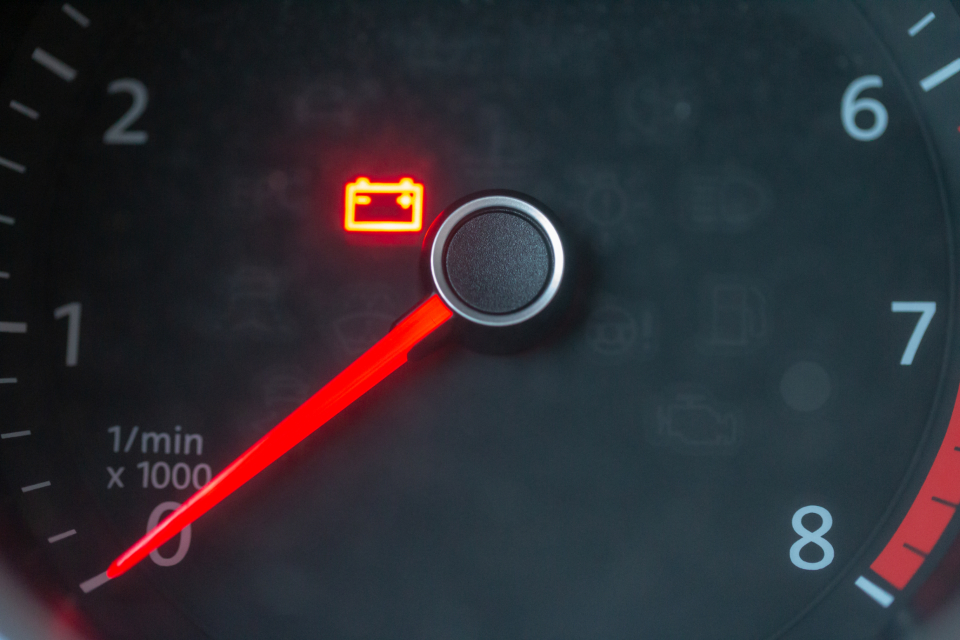
If you've ever rented a car in Europe, watched a Formula 1 broadcast, or read the spec sheet on a new motorcycle, you've run into the same small puzzle: the speedometer says one thing, but your brain thinks in another unit. In the United States we measure speed in miles per hour (mph), while most of the world uses kilometers per hour (km/h). Knowing how to flip between the two, quickly and accurately, keeps you out of speeding tickets abroad and makes international stats actually mean something.
The good news is that the conversion is fixed, exact, and easy to estimate in your head. This guide gives you the precise factor, several mental-math shortcuts, the related conversions to meters per second and knots, a look at real speed limits overseas, and a clean reference table for the speeds Americans hit most often.
The Exact Conversion Factor
Here is the number to memorize: 1 mph = 1.609344 km/h exactly. That figure isn't a rounded approximation; it comes straight from the international definition of the mile. By international agreement (adopted in 1959 by the United States and the Commonwealth nations), one mile is defined as exactly 1,609.344 meters, or 1.609344 kilometers. Since both "per hour" units share the same hour, the speed ratio is identical to the distance ratio.
So to convert any speed:
- mph to km/h: multiply by 1.609344
- km/h to mph: divide by 1.609344 (or multiply by 0.621371)
For example, 60 mph × 1.609344 = 96.56 km/h, and 100 km/h ÷ 1.609344 = 62.14 mph. Those two numbers (60 mph and 100 km/h) are worth remembering on their own, because they're close cousins that show up constantly on highways. When you need an exact answer for any value, our speed converter handles mph, km/h, m/s, knots, and feet per second in one step.
Quick Mental Math Tricks
You won't always have a calculator handy at a toll booth, so here are shortcuts that get you within a couple of percent.
Trick 1 - Multiply by 1.6 (mph to km/h). Rounding 1.609344 down to 1.6 is close enough for everyday driving. Take the mph, multiply by 1.6: 50 mph becomes 80 km/h, 70 mph becomes 112 km/h. The error is only about 0.6 percent, so you'll never be off by more than a km/h or two at normal speeds.
Trick 2 - Add half plus a tenth. If multiplying by 1.6 feels awkward, break it up. Take the mph, add half of it, then add a tenth of the original. For 40 mph: 40 + 20 + 4 = 64 km/h (the exact answer is 64.4). This works because 1 + 0.5 + 0.1 = 1.6.
Trick 3 - The Fibonacci coincidence (km/h to mph). Here's a fun one. Consecutive Fibonacci numbers (5, 8, 13, 21, 34, 55, 89) approximate the mile-kilometer ratio because the golden ratio (about 1.618) is remarkably close to 1.609. So 5 mph ≈ 8 km/h, 8 mph ≈ 13 km/h, 13 mph ≈ 21 km/h, 55 mph ≈ 89 km/h. To go from km/h to mph, just shift down one Fibonacci number: 89 km/h ≈ 55 mph.
Trick 4 - The 5/8 shortcut. Since 1 km is roughly five-eighths of a mile, you can multiply km/h by 5 and divide by 8 to get mph. For 80 km/h: 80 × 5 = 400, then ÷ 8 = 50 mph. Reverse it (multiply by 8, divide by 5) to go from mph to km/h.
Which trick should you use? For driving abroad, the multiply-by-1.6 method is fastest when you're reading km/h signs and want a rough mph feel; just remember that km/h numbers are always bigger than the equivalent mph, never smaller. The 5/8 method is the most accurate of the mental shortcuts because five-eighths (0.625) is very close to the true 0.621371 factor. Whichever you pick, practice on a few familiar speeds before your trip so the conversion becomes automatic when a sign flashes by at 110 km/h.
Don't Forget m/s and Knots
Miles and kilometers per hour aren't the only speed units you'll meet. Two others matter, especially in science, weather, and travel.
Meters per second (m/s) is the standard SI unit physics teachers and engineers prefer. To convert:
- km/h to m/s: divide by 3.6 (because there are 3,600 seconds in an hour and 1,000 meters in a km)
- m/s to km/h: multiply by 3.6
- mph to m/s: multiply by 0.44704
So a 100 km/h highway speed is about 27.8 m/s, and a brisk 10 m/s wind is 36 km/h, or roughly 22 mph. Weather reports in the U.S. often use mph for wind, while international forecasts and aviation lean on m/s and knots.
A knot is one nautical mile per hour, used in aviation, sailing, and marine forecasts. One nautical mile is defined as 1,852 meters (it's based on one minute of latitude around the Earth), so:
- 1 knot = 1.852 km/h = 1.15078 mph
That's why a cruising airliner reporting "480 knots" is moving about 552 mph or 889 km/h. When meteorologists quote hurricane wind speeds, U.S. outlets translate knots into mph, which is part of why the National Hurricane Center category thresholds (a Category 3 begins at 111 mph) look like odd numbers; they're rounded conversions from knots.
Speed Limits Around the World
Once you can convert, foreign speed limits stop being mysterious. Here's the key context for American drivers heading overseas: nearly every country except the U.S., the UK, and a handful of others posts limits in km/h. The numbers look alarmingly high until you realize 130 km/h is only about 81 mph.
- Highways/motorways: Common limits are 110 to 130 km/h (about 68 to 81 mph). France posts 130 km/h on dry autoroutes (110 km/h in rain). Germany's famous Autobahn has stretches with no fixed limit but a recommended 130 km/h.
- Rural roads: Often 80 to 100 km/h (about 50 to 62 mph).
- Urban/city streets: Frequently 50 km/h (about 31 mph), with many city centers dropping to 30 km/h (about 19 mph) zones near schools and pedestrians.
Two practical warnings. First, your rental car's speedometer will almost certainly read in km/h as the primary scale abroad, so trust the dial and the signs, not your American instinct. Second, many countries enforce limits with automatic speed cameras and mail tickets to the rental agency, which then charges your card, so the conversion math is worth getting right. If you're comparing distances on a road trip too, the same logic applies to mileage; our length converter switches between miles, kilometers, meters, and feet instantly.
Conversion Table for Common Speeds
Here are the speeds Americans encounter most, converted to km/h, m/s, and knots. Keep this handy for travel and quick reference.
| mph | km/h | m/s | knots | Where you'll see it |
|---|---|---|---|---|
| 15 | 24.1 | 6.7 | 13.0 | School zones |
| 25 | 40.2 | 11.2 | 21.7 | Residential streets |
| 30 | 48.3 | 13.4 | 26.1 | City/town roads |
| 45 | 72.4 | 20.1 | 39.1 | Major arterials |
| 55 | 88.5 | 24.6 | 47.8 | Older interstate limit |
| 65 | 104.6 | 29.1 | 56.5 | Common highway limit |
| 70 | 112.7 | 31.3 | 60.8 | Rural interstate limit |
| 80 | 128.7 | 35.8 | 69.5 | Texas / Western limits |
A few highlights worth committing to memory: the old national 55 mph limit is almost exactly 88.5 km/h; the popular 65 mph highway limit is roughly 105 km/h; and 70 mph works out to 112.7 km/h. The fastest posted limits in the U.S. (85 mph on one Texas toll road) come to about 137 km/h, still slower than France's autoroutes.
Why the Conversion Matters Beyond Driving
Speed conversion isn't just for road trips. It quietly shows up in plenty of corners of daily American life:
- Sports: A 100 mph fastball is about 161 km/h; international soccer and track stats often arrive in metric. A 10-second 100-meter sprint averages 10 m/s, or 22.4 mph.
- Weather: Wind gusts, hurricane categories, and tornado ratings get reported in mph here but in km/h or m/s abroad. A 75 mph hurricane-force gust is about 121 km/h.
- Tech specs: Drone top speeds, e-bike limits, and car reviews from European outlets all list km/h. A 28 mph (Class 3) e-bike caps out at about 45 km/h, the EU's pedal-assist ceiling.
- Science class: Physics problems almost always use m/s, so converting from the mph in a word problem is a constant first step.
Understanding units is really just one slice of everyday measurement literacy. Once you're comfortable swapping speed units, the same thinking applies to distance, area, weight, and temperature. If you find yourself converting plot sizes or floor plans, the same site has an area converter for square feet, acres, square meters, and hectares.
The Bottom Line
Speed conversion comes down to one exact number: 1 mph = 1.609344 km/h. Multiply by 1.6 for a fast mental estimate, divide by 1.6 (or use the 5/8 trick) to go the other way, and remember that 60 mph and 100 km/h are the two anchor speeds that frame almost everything else. Layer in m/s (divide km/h by 3.6) and knots (1 knot = 1.15 mph) and you can decode any speedometer, weather report, or spec sheet on the planet.
When precision matters, especially before you drive abroad or solve a physics problem, skip the rounding and run the exact figures through our speed converter. A two-second check beats guessing wrong at 130 km/h.




Comments